
The Pros and Cons of Air Source Heat Pumps, Explained by BPS Facilities
With energy prices high and net-zero targets tightening, more South Wales businesses are looking at air source heat pumps as an alternative to traditional heating. They can cut running costs and carbon emissions, but aren’t right for every building. This guide explains how air source heat pumps work, and their pros and cons for commercial premises, so you can decide whether one suits yours.
Key Takeaways
- Air source heat pumps transfer heat from the outside air to provide efficient heating and, in many systems, cooling for homes and commercial properties.
- Compared with traditional heating systems, air source heat pumps can reduce energy consumption, lower running costs, and decrease carbon emissions when correctly specified and installed.
- Additional benefits include quieter operation, improved indoor air quality through filtration, and year-round temperature control from a single system.
- Installation costs are generally higher than conventional heating systems, and performance depends on factors such as property insulation, system design, and electricity supply.
- Choosing the right air source heat pump requires a professional assessment of your property’s heating demand, layout, and long-term energy goals.
- BPS Facilities provides expert advice, site surveys, installation, and maintenance services to help customers across South Wales determine whether an air source heat pump is the right solution for their property.
What Are Air Source Heat Pumps?
Before we discuss the pros and cons of air source heat pumps, it is important to understand exactly what these tools are. There are a few different types of air source heat pumps to understand.
First of all, there are ductless air source heat pumps. These are very simple in their design.
In general, they consist of an outdoor condenser attached to indoor heads. In between these two parts, they are connected through a small hole in the wall.
Some forms of air source heat pumps use ducts and vents to distribute air throughout your premises.
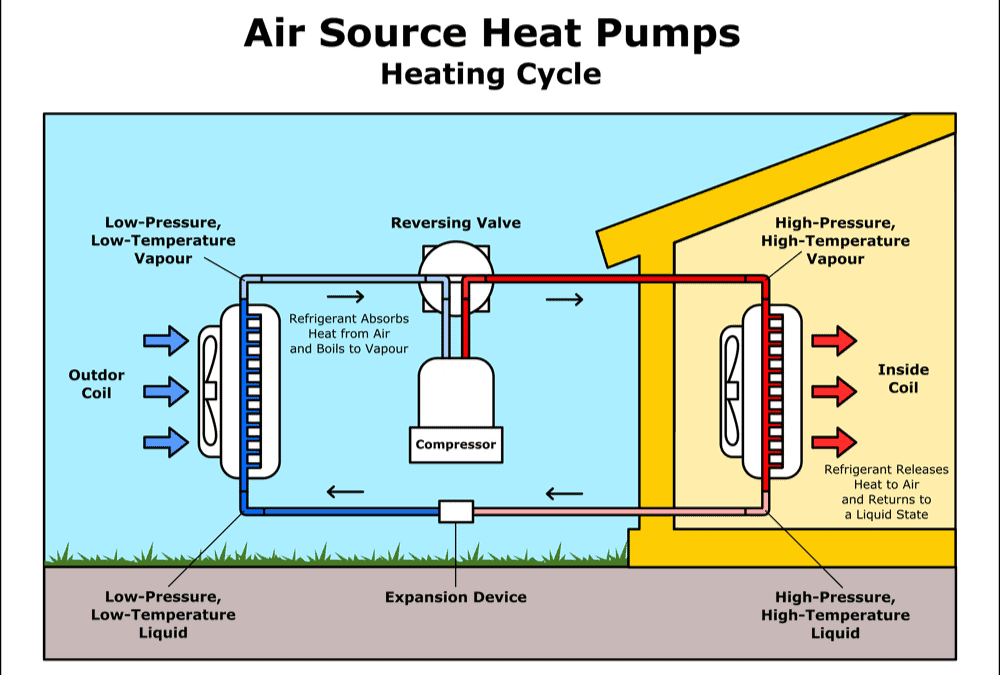
The majority of air source heat pumps use something called split systems. That means that they have both a coil inside and a coil outside.
Alternatively, a packaged system will keep both coils outside along with a fan. These systems are then attached to a series of air ducts to transport air where you need it to go.
Regardless of what kind of air source heat pump you get, there are some things that are common to all of them. Basically, air source heat pumps work like refrigerators.
Many property owners do not realise that refrigerators actually generate more heat than they eliminate.
At the same time that a refrigerator keeps its inside cool, it generates heat around it. Air source heat pumps generate heat and direct it into your building. They also generate cool air, but they direct that air outside.
On the other hand, air source heat pumps can also be used to cool your premises down. They continue their basic function, only they reverse where they direct air. The cool air can be directed in your property while the hot air is directed outside.

Advantages of Air Source Heat Pumps
Air source heat pump benefits include high energy efficiency. They also have a number of benefits for health and wellness. They are able to function alternatively to heat air up or cool air down.
First, let’s talk about how efficient air source heat pumps are.
Compared to most other heating technologies, air source heat pumps use relatively little energy.
Consuming less energy means also generating fewer greenhouse gases. That can decrease your contribution to the greenhouse effect and climate change.
Next, air source heat pumps provide some health and wellness benefits. They make a lot less noise than many other kinds of heating systems. That can make your building a lot more pleasant to stay in.
Air source heat pumps automatically filter air. That means that you can breathe higher quality air inside your property.
Many property owners underestimate how important it is to breathe air of higher quality. The closer you live to a city, the more likely there is to be significant pollution in the air. That has both subjective and health side effects.
The cleaner the air you breathe, the less likely you are to develop a long list of diseases in the long run. Plus, you breathe so many times every day that even a small increase in your enjoyment of breathing can make your whole life feel a little better.
Lastly, air source heat pumps can work alternatively to heat or cool your premises. That is a level of functionality that very few other tools can match.
Disadvantages of Air Source Heat Pumps
Cost is the main consideration.
Air source heat pumps carry a higher upfront cost than a conventional system, and for a commercial installation the figure depends heavily on the size of the building, its heat demand and how well it’s insulated.
The trade-off is lower running costs and emissions over the system’s life.
So the right question isn’t just the purchase price but the payback period for your specific premises, which is something we can assess on a site survey.
Understanding the Pros and Cons of Air Sourced Heat Pumps
Whether an air source heat pump is right for your premises depends on the building, its heat demand and your longer-term energy plans. At BPS Facilities, we can assess your site and advise honestly on whether a heat pump or an alternative heating system makes most sense for your property. Contact us today on 029 20 484114 to arrange a site survey.